Haptic Wallpapers
Haptic Wallpapers turn your idle screen into something you can feel. Tap water and it ripples back under your finger. Built on a texture-to-emotion map from real lab research — so the feedback is calming by design, not just another buzz.
- Role
- UX Research & Concept Design
- Method
- Lab experiment · Interviews
- Partner
- Dept. of Psychology, Delhi University
- Outcome
- A UI & haptics feeling-coded model
The Gap
Today's haptics notify you, then vanish.

Phones can render stunning visuals and rich audio. Touch got left behind. As Microsoft Research puts it, today's tactile feedback is mostly limited to buzz — vibrations from an internal motor that notify you and then disappear. It's touch reduced to a single, blunt signal.
Process
How I worked — a double diamond
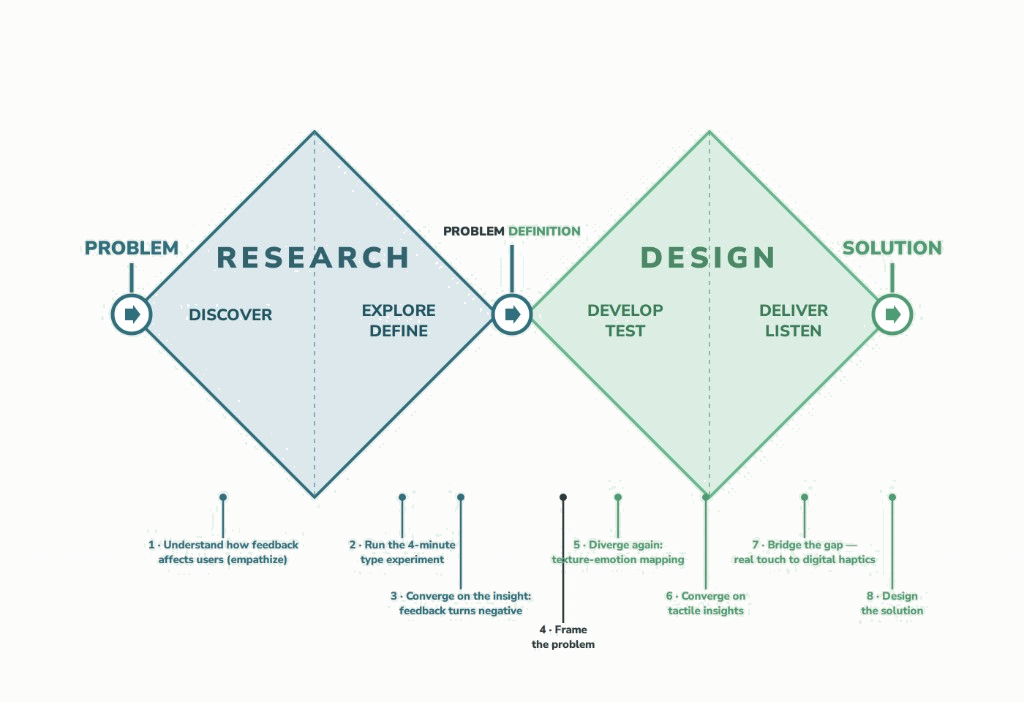
Research · Probe 1
User perspectives
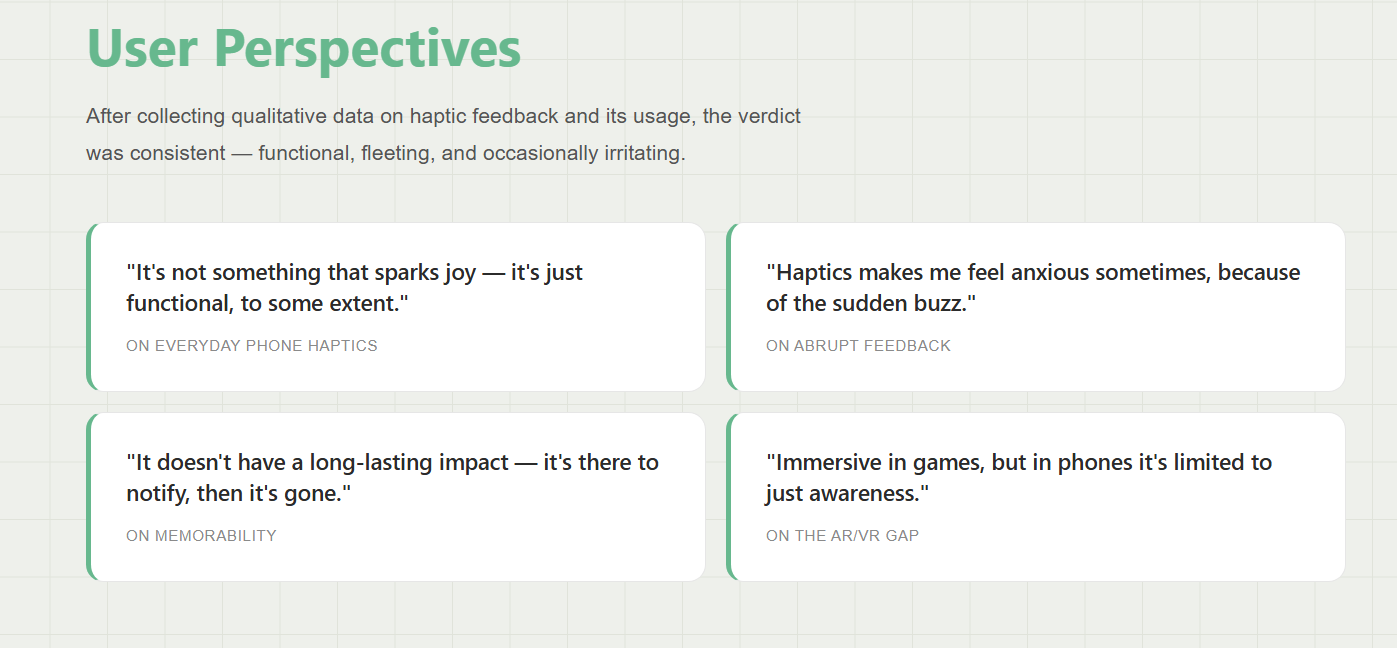
I started with how people actually feel about the haptics they already live with. Six participants, interviewed about everyday phone feedback. The verdict was consistent: functional, fleeting, and occasionally irritating.
The 4-minute type experiment
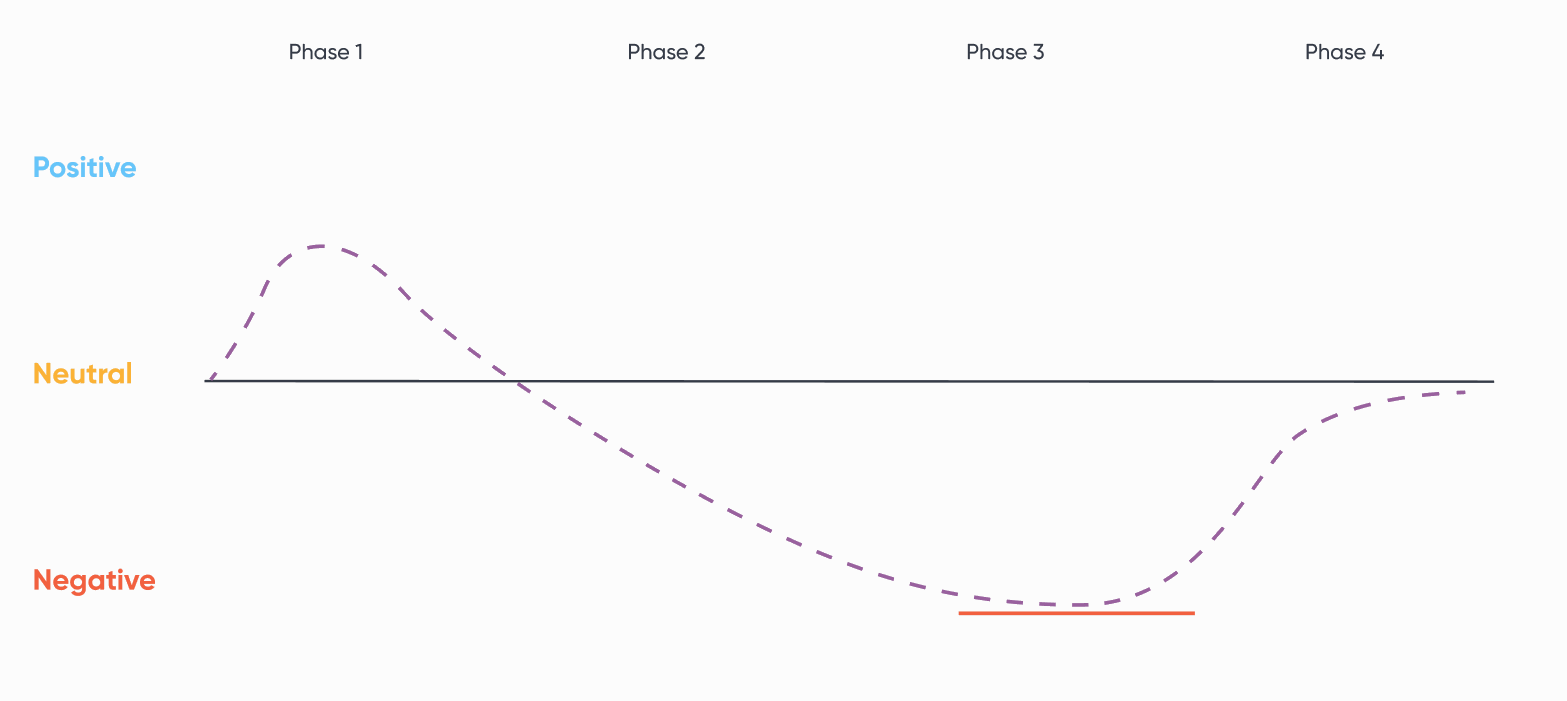
Then I tracked how typing haptics felt across a four-minute session, in four phases. Sentiment that started neutral drifted steadily toward negative — the buzz that helps at first begins to grate.
That negative emotional state is exactly what I set out to target.
Problem Statement
How might we enhance haptic feedback in standard devices to create joyful, real-life, user-friendly experiences?
Research · Probe 2
So I studied how real textures make people feel.
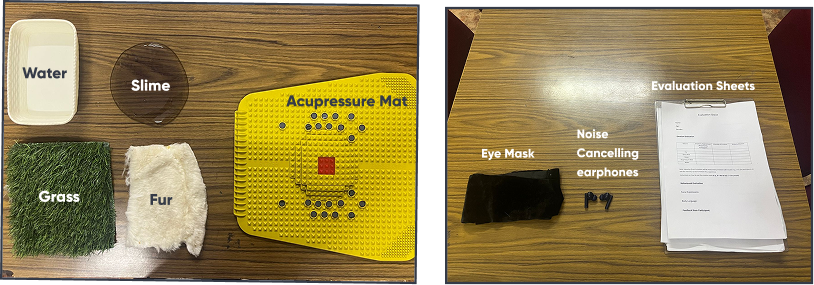
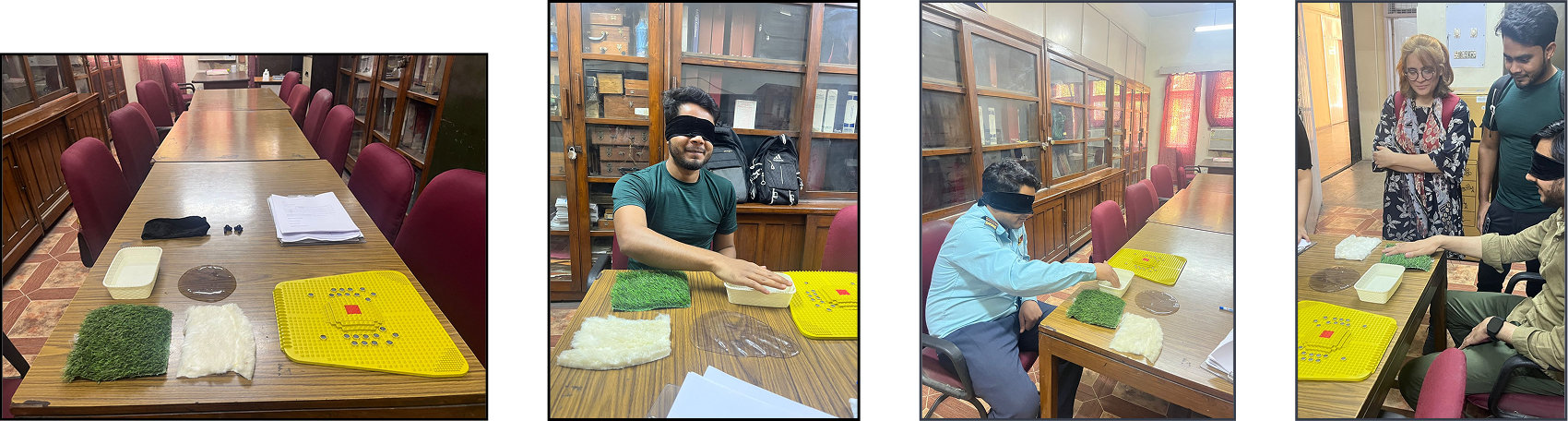
To improve tactile feedback, I first had to understand touch in the real world. So I designed an experiment — conducted under Dr. Dinesh Chhabra in the Psychology department at Delhi University — to explore the emotions different textures evoke, without any visual or auditory influence.
The setup: participants wore an eye mask and noise-cancelling headphones, touched each material, and rated the intensity on a 0–5 Likert scale while I logged facial and behavioral responses.
Inside the lab
What the textures revealed
Universally calming across all participants — a reliable anchor for gentle, positive feedback.
Sharp, abrupt textures triggered negative emotion in nearly everyone — touch read as a threat.
Unlike a fleeting phone buzz, sharp-texture discomfort persisted — proof touch leaves a mark.
- 1Distinct emotions mapped to distinct tactile sensations.
- 2Abrupt contact with sharp textures induced anxiety.
- 3Previous encounters with textures influenced subsequent interactions.
- 4Participants experienced a heightened intensity of negative emotions.
The pivotal move
Each finding became a design principle.
This was the crucial step: translating real-world touch into feedback a device can actually produce. Haptics is touch in the real world — so every insight from the texture study became a principle to design against.
The Solution
Interactive Haptic Wallpapers
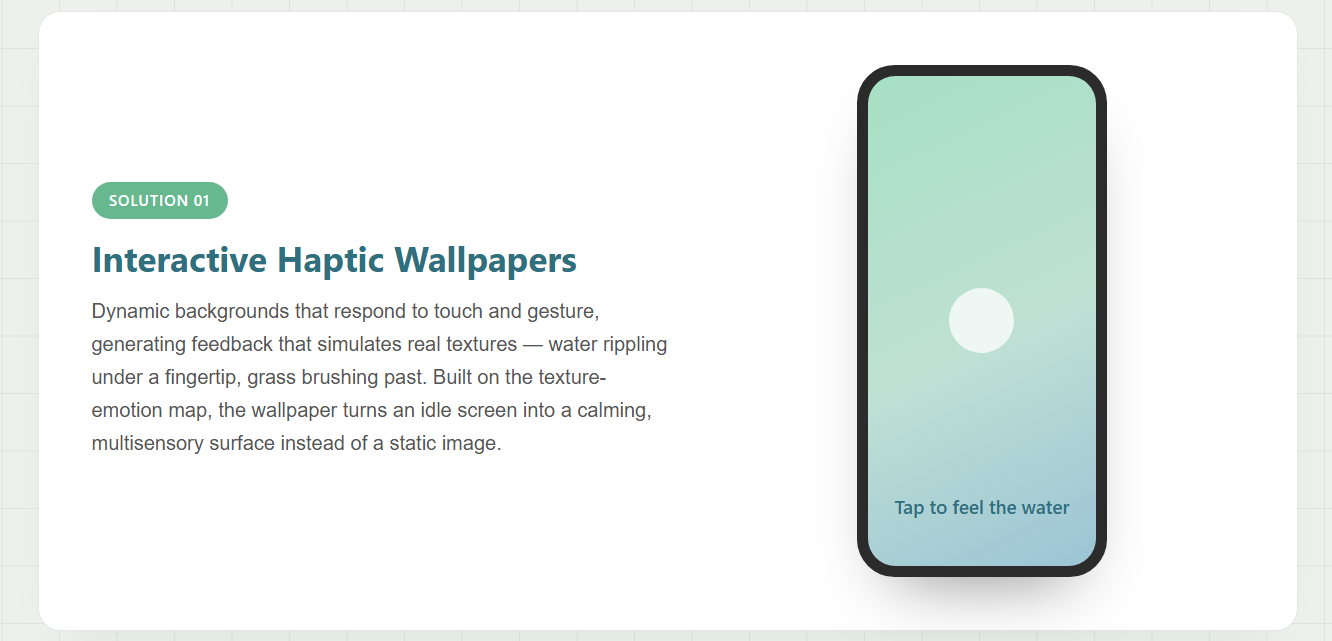
Dynamic backgrounds that respond to touch and gesture, generating feedback that simulates real textures — water rippling under a fingertip, grass brushing past. The idle screen becomes a calming, multisensory surface instead of a static image.
How the UI works
- A new feature living inside iPhone settings.
- Choose a texture — water, sand, concrete, or grass.
- The texture wallpaper applies to your screen; swipe, tap, and feel it.
I built a rough prototype to prove it wasn't just a poster.
To check feasibility, I dug into the research on texture perception and found that the difference between textures is largely a difference in vibration intensity. So I coded a rough desktop prototype that adjusts existing vibration motors — and layers in sound — to fake the feel of concrete versus water. It worked well enough to prove the core bet.
Impact
What this concept proved, and what it leaves behind.
What it proved.
A rough prototype confirmed the core bet — varying vibration intensity alone can make one surface feel like water and another like concrete. The illusion holds.
What it leaves behind.
A reusable texture-emotion map — six principles pulled straight from tactile research — that other designers can build feedback against.
Where it could go.
Customizable, non-intrusive, soothing feedback has a genuine accessibility case for sensory-sensitive and ASD users.
An honest caveat
Six participants is a small sample. Before I'd trust the texture-emotion map as a system, I'd want to validate it at scale — and pressure-test whether the vibration illusion holds on production phone hardware, not just my desktop rig.
Next steps
Build a working mobile prototype, and go deeper into the mechanics of texture feedback itself.
Designing feedback that resonates — touch that's joyful, not just functional.
A heartfelt thanks to Prof. Dinesh Chhabra, my friends and participants, and the Department of Psychology, Delhi University.